![How To Become a Proofreader In [current_year]](/_next/image?url=https%3A%2F%2Fcdn.dollarberg.com%2Fposts%2Fcoffee-7567749_1920.jpg&w=1920&q=75)
Are you someone who finds grammatical errors and typos in everything you read?
Do you have a keen eye for detail? If so, you may have what it takes to become a proofreader.
But what exactly does a proofreader do, and how can you become one?
Proofreaders ensure the accuracy and quality of written materials. They review the content to eliminate mistakes and make the work better.
As the world becomes increasingly digital, the need for proofreaders has never been greater.
From books to blogs, every piece of written content needs to be checked before it's published.
In this article, we will guide you through the steps to becoming a proofreader, from developing the necessary skills, tips and tricks, tools to use, and where to find your first job.
Let’s dive in.
Who is a proofreader?
Proofread Anywhere
Learn how to become a proofreader and make $40k a year from home as a freelance proofreader with this wildly popular program!
15,000+ students. 7+ years of results.
Before we dive into the process of becoming a proofreader, it's essential to understand who is a proofreader and the roles they have.
A proofreader is a professional who reads through written content to review it for errors in spelling, grammar, punctuation, formatting, and syntax.
The written content they proofread can range from articles, manuscripts, books, plays, academic papers, and documents.
They are responsible for ensuring that the written content is free of errors, and is consistent in conveying the intended message.
Proofreaders are essential in the editing process. They work independently as contractors or as part of a team of editors.
Is Proofreading a legitimate career?
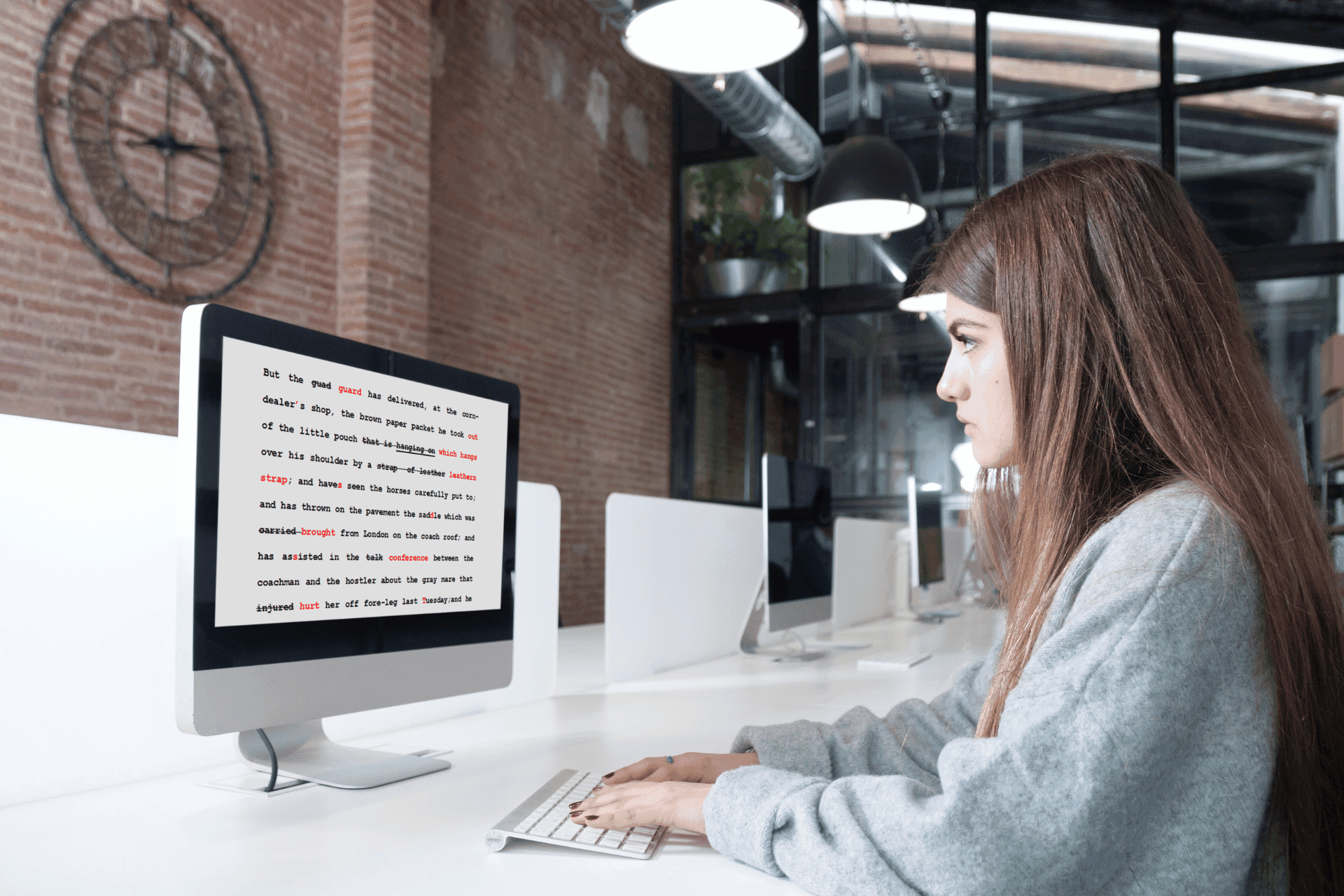
Yes, proofreading is a legitimate career that can provide a good and sustainable income without working any other job.
It provides a great opportunity for individuals who love to read and have a keen eye to detect any mistakes in pieces of writing.
You get great flexibility working as a proofreader. This is because you can work at home part or full-time.
This career path also gives you the option to work as a freelancer, be employed in an organization, or both.
Many individuals, businesses, publishers, and authors require the services of a proofreader to ensure that their content is better for their audience.
Can I become a proofreader with no experience?
How Caitlin Pyle started proofreading: She made $40k in one year as a part-time remote proofreader!
Meet Caitlin Pyle, a proofreading superstar who discovered her love for correcting grammar and spelling while studying in Germany.
Her natural talent for spotting even the tiniest mistakes made her a go-to resource for fellow students seeking to perfect their essays.
But Caitlin’s passion for proofreading didn’t end with college. She continued to pursue her dream and started helping court reporters with their transcripts.
Her reputation for precision and accuracy quickly earned her the nickname “Eagle Eyes” among her colleagues.
With her skills in high demand, Caitlin soon turned her proofreading passion into a thriving career. Just one year after starting her business, she made over $40,000 annually as a proofreader!
Now, Caitlin is sharing her expertise with others through a Free Proofreading Workshop. This workshop is perfect for anyone who wants to work from home and make money online by turning their love of grammar into a lucrative career.
If you’re interested in learning more about
Yes, you can become a proofreader with no experience.
Every renowned proofreader started as a beginner with no experience. Although it may be challenging starting, it is possible to build your skills through taking courses.
Proofreading courses and certification programs provide the skills and knowledge needed to be a successful proofreader.
You can also gain experience by proofreading content from friends, family, or your writing.
It is also possible to volunteer to proofread for businesses, local publications, and non-profit organizations for experience.
Do I need a degree to become a proofreader?

No, you do not need a degree to become a proofreader.
My findings show that taking on work as a proofreader largely requires a strong command of the English language.
However, having a degree in English, journalism, or a related field can be advantageous as some organizations require this.
In most cases, employers prefer candidates who demonstrate the ability to effectively handle tasks through relevant work experience.
What do I need to become a proofreader?
To become a proofreader, you will need to have the following skills:
Strong language skills
Excellent grammar, spelling, and punctuation
Attention to detail to identify errors in written materials
Great time management and organizational skills
The ability to work independently and meet deadlines
Knowledge of proofreading software and tools
A computer with reliable internet access
Excellent communication skills
How much do proofreaders make?
The amount of money proofreaders make depends on their expertise, project scope, industry, and location.
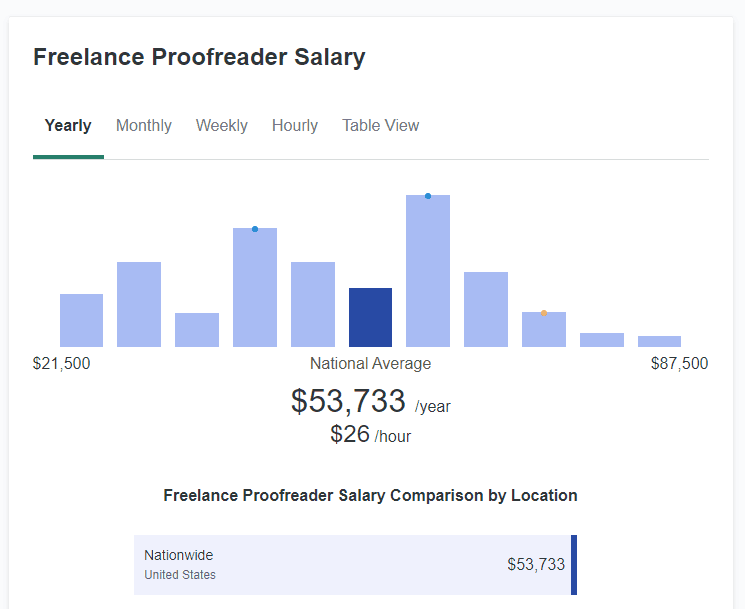
Proofreaders are paid hourly or project-based rates. The rate per hour can range from $12.5 to $50 with an average of $26 an hour.
According to ZipRecruiter, the annual average salary for a freelance proofreader in the United States is $53,733.
This translates to about $4,500 a month. The figure only represents the median hourly wage.
Some proofreaders may earn significantly more or less depending on their circumstances.
For example, proofreaders who work in industries such as law or finance may be able to command higher rates due to the specialized nature of the work.
There is potential to earn a decent income in this field for those with the right skills and experience.
Beginner proofreaders tend to earn lower with their rates ranging from $10 to $25 per hour. They work on simpler projects with little to no specialization.
Proofreaders without experience often start out working on freelance platforms which tend to pay low compared to specialized companies.
Is there a demand for proofreaders?
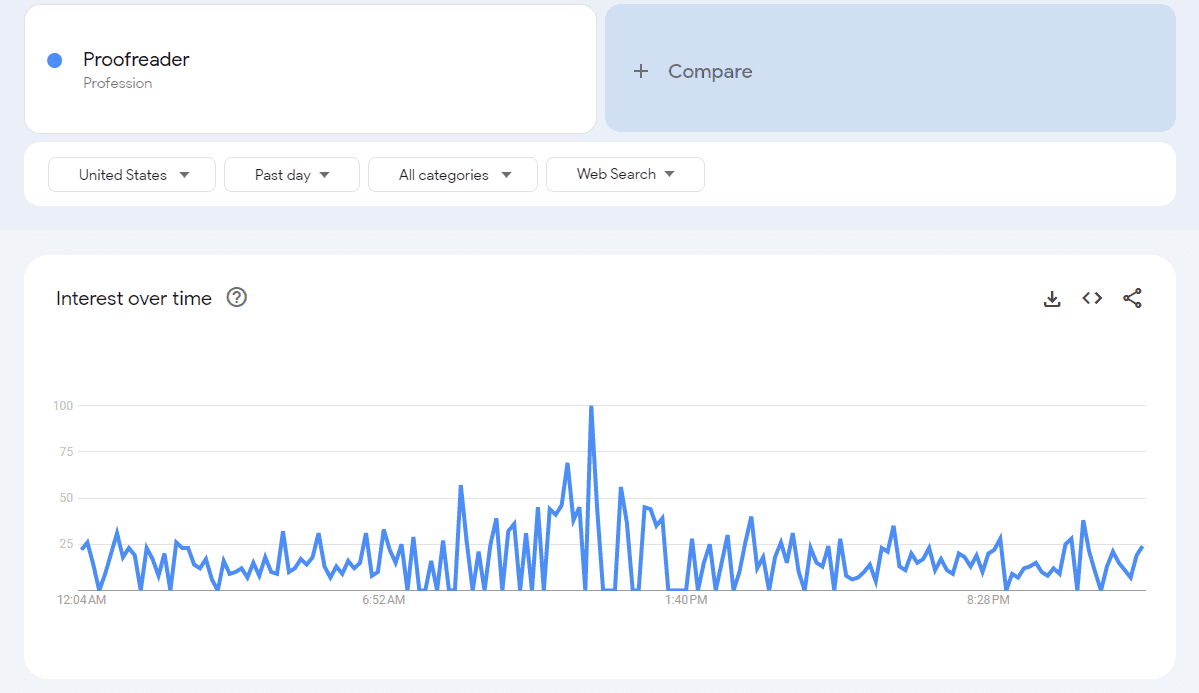
Yes, there is a high demand for proofreaders in various industries. As more content is created, the need for proofreading services continues to rise.
Google Trends data shows a rise in proofreading jobs in the last five years, with the demand looking to grow year on year.
The recruiter estimates that the demand for proofreaders and copy marketers is set to go up with more than 3,500 jobs being filled.
Proofreaders are essential in numerous industries, including publishing, journalism, marketing, and education, making it a highly in-demand profession.
In recent years, the demand for proofreaders has increased with the rise of digital content, such as blogs, websites, social media content, and digital products such as e-books.
A quick search on the most popular job sites indicates a high number of employers who are looking for proofreaders.
On Indeed, a quick search for a proofreader job yields 3,600 job postings.
You’re likely to find unlimited opportunities when you use multiple platforms to find ideal proofreading jobs.
Can I be a proofreader from home?

Yes, you can be a proofreader from home. From my research, many proofreaders consider this the main advantage of taking up proofreading as a career.
Many proofreading jobs can be done remotely, both part and full-time, making it a flexible career option for those who prefer to work from home.
The main focus of this article is to guide anyone looking to become a proofreader while working from home.
Whether you are a stay-at-home parent, a college student, or looking for a new career path, this guide will help you learn how to become a proofreader from home.
Working from home as a proofreader has many benefits.
The top three include the flexibility to work on your schedule, the ability to work from anywhere with an internet connection, and the potential to earn a good income.
However, it is important to know that becoming a successful proofreader from home requires a combination of skills, training, and experience.
How to Become a Proofreader
Save or Bookmark this Page on Pinterest
I'll be updating this article every season, so make sure you click the button below and save this blog post to your favorite Pinterest board.
Pinning it will ensure that you can refer back to this detailed article!
Becoming a proofreader takes time and effort. There are steps to take to build your skills, and start and grow your business to attract clients.
The steps to becoming a proofreader are:
Learn about proofreading
Before embarking on a career as a proofreader, you need to learn how to become a professional proofreader.
In the writing process, proofreaders carefully examine written material to detect any errors and enhance the quality of the writing.
This essential task benefits both writers and readers, as it ensures that the intended message is accurately conveyed.
Proofreaders enhance the reading experience for audiences by ensuring that the writing is clear, concise, and error-free.
To become a proficient proofreader, the simplest way is to consume as many online resources as possible.
And, to avoid being overwhelmed, enroll in structured courses that teach all the necessary steps.
You can find both free and paid courses online.
An online proofreading course I would recommend is by Caitlin Pyle of Proofread Anywhere.
She is a proofreader and blogger who started her proofreading business 10+ years ago.
Through her courses, e-books, and workshops, she has been able to train thousands of proofreaders all over the world.
She has a free workshop where you can learn the theory and practice of general proofreading.
The 76-minute general proofreading workshop takes you through how to proofread documents and find prospects.
It also demystifies the myths surrounding starting a freelance proofreading business.
This workshop alone is enough to kickstart and grow your business.
You can also enroll for a free 7-day introduction course on transcript proofreading. This course is more technical compared to general proofreading.
It provides an opportunity to earn more than a general proofreader due to the specialization.
With either of the training, you will benefit from guidance from an experienced professional who knows what works in the industry.
There is also a community with other proofreaders where you can share ideas and find encouragement and motivation.
It also provides a chance to network and form valuable connections, collaborations, and opportunities for further growth and development as proofreaders.
Identify what proofreading services to offer
Now that you have the necessary training and skills to become a proofreader, you need to identify which services you want to offer.
The services you offer need to match your skills and expertise. There are four types of proofreading opportunities in the marketplace.
You need to understand each type to help you identify what services to offer and the type of clients to engage.
The different types of proofreading include:
Academic Proofreading
Academic proofreading involves reviewing academic documents for students, professors, and researchers.
These documents may include research papers, essays, and dissertations.
Academic proofreaders check for grammar, spelling, punctuation, and formatting errors to ensure the text adheres to the prescribed academic style.
They also make sure that all sources referenced in a paper are correctly listed on the works cited or reference list.
Proofreaders also remove any sources listed in the works cited that are not used in the paper.
All these tasks are crucial to uphold the accuracy and credibility of the academic work before submission or publishing.
Business Proofreading
Business proofreading involves working on content produced by all types of businesses.
The business content ranges from reports, business plans, marketing materials, emails, website copy, and memos.
This type of proofreading is important for businesses to maintain a professional image, build credibility with their audience, and improve their communication skills.
Business proofreaders, check for content correctness to ensure the language is clear, concise, and professional.
They also work to make the tone, style, and branding consistent throughout and in line with the business guidelines.
To effectively proofread business content, you need a clear understanding of the business, its target audience, and the intended message.
Print Media Proofreading
Print media proofreading targets all types of publishers. It may involve reviewing work for publishing organizations or individual authors.
The content may range from books, magazines, screenplays, newspapers, directories, cards, and brochures.
The goal is to make the material free from errors, consistent, and visually appealing.
Aside from the writing, print media proofreaders also pay attention to font size and style, line spacing, margins, and other formatting elements.
These elements affect the readability and visual appeal of the material.
Translation Proofreading
Translation proofreading reviews translated content to ensure it is accurate, culturally appropriate, and effectively conveys the message of the original document.
This type of proofreading targets individuals and businesses that communicate with non-English speakers or audiences.
Translation proofreaders should have a good understanding of the target, source language, or both.
Proofreaders under this category can be monolingual or bilingual.
Monolingual proofreaders have expertise in the language of the final document and not necessarily the original.
Here, the focus is on the translated content rather than the original.
With bilingual proofreading, the proofreader is proficient in both the source and target languages.
They go over the original content and compare it to the translated version to ensure accuracy, consistency, and adherence to the intended meaning.
When starting, it's best to provide general proofreading services instead of focusing on a particular area.
By offering a range of proofreading services, you can gain experience and discover your strengths and interests.
Once you've found your niche, you can specialize in that area to offer more targeted and effective services.
You can also niche based on your experience and background.
For example, if you have experience in law, you may want to specialize in proofreading legal documents.
By specializing, you set yourself apart as an expert, differentiating yourself from other proofreaders and commanding better rates.
Learn proofreading skills and techniques
To become a successful proofreader, you need to have excellent language and grammar skills.
Even with basic skills, there’s always room to improve and become a better proofreader.
To gauge your proofreading skills, take an online proofreading quiz. This will help you identify the areas to work on.
From my experience, you improve your proofreading skills by continuously taking courses, reading books, and attending workshops.
You should also stay up-to-date with the latest trends and best practices in proofreading by reading industry publications and online forums.
Aside from learning, it's also important to practice what you learn to hone your skills.
Create your resume and portfolio
A resume and portfolio help to showcase your skills and experience to potential clients.
Your resume should include details about you such as your education, certifications, and relevant work experience.
The portfolio on the other hand includes examples of your proofreading work.
When you’re starting, you may not have professional samples to showcase. However, this should not stop you from creating a compelling portfolio.
You can gain samples by offering your services to friends, family, or local businesses.
Another good way to obtain sample work is by volunteering in exchange for testimonials.
You should update your resume and portfolio regularly as you do more work and gain proofreading experience.
Decide your rates and proofreading packages
The next step is to determine the rates for your proofreading services and create packages that suit the needs of different clients.
Your rates and proofreading packages communicate your value to potential clients.
They should reflect your experience and expertise. You should also consider the market rates, your expenses (if any), turnaround time, and complexity of work.
As a proofreader, you can decide to charge per hour, per word, or project.
Track your time and productivity when proofreading to ensure you are charging a fair price for your effort and services.
You can also offer different packages, based on the scope of work, client needs, and the level of proofreading required.
It can be overwhelming to decide on your rates as a beginner proofreader. To have an idea of what rates to start with, consult other proofreaders online.
You can also use the rates recommended by various editorial organizations such as the Editorial Freelancers Association (EFA).
When sharing your rates, be as clear and transparent as possible. Understand all that a job requires to charge accordingly.
Also, have provisions in place to accommodate any changes in the scope and timeline of work.
For clients with bulk or long-term work, offer incentives such as discounts to build goodwill.
Just like your resume and portfolio, your rates should keep changing. Ensure that you remain competitive and adjust your rates as necessary.
Be on the lookout for new clients as it allows you to set higher rates.
Create your social media pages
Social media is a great way to showcase your work and connect with potential clients.
You can create pages on social media platforms such as LinkedIn, Twitter, and Facebook.
Creating profiles on multiple platforms can be overwhelming and difficult to manage. This is because they need content often to reach more people.
Instead of creating many social media pages for your business, focus on one or two.
Choose platforms where you’re likely to find your ideal clients. It would also help if you are familiar with the platforms you choose.
Your social media pages should include your contact information, examples of your work, and testimonials from satisfied clients.
Build your business blog
A blog for your proofreading business is a great way to build your brand and establish yourself as an expert.
You can use the blog to showcase your proofreading skills, share knowledge, discuss industry news, and share examples of your work.
A blog is also a way to attract potential clients. Ensure that you provide all the relevant details people should know about your proofreading business.
The key details to have include:
Contact details
Relevant personal information
Your services, rates, and packages
Areas of specialization
Testimonials
In case you’re not familiar with creating a blog, read this detailed guide with a step-by-step process to follow.
You can also hire my services as a web developer and get yourself a responsive and professional website for your proofreading business.
Identify your ideal clients
To market your services effectively, you need to know who your ideal clients are.
Ideal clients are the people or businesses that are likely to need your services.
The best way to identify your ideal clients is by considering their industry, needs, location, and budget.
For example, if you specialize in proofreading academic papers, your ideal clients may be students or academic institutions.
If you specialize in proofreading business documents, your ideal clients may be small businesses or corporations.
By identifying your ideal clients, you can tailor your marketing efforts to reach them more effectively.
Market your services
Now that you have set up your business structures, it’s time to market yourself to find clients and make money.
Marketing your services is essential to building your proofreading business.
There are many ways to market your services. You can use social media, email marketing, paid marketing, and networking.
You can also use the many job boards and platforms to seek out clients looking for proofreaders.
When marketing your services, emphasize the benefits of working with you.
For example, highlight your expertise, processes, turnaround times, or your competitive rates.
Network
Networking is crucial in any business or profession, and proofreading is no exception.
It allows you to connect with potential clients and other professionals in the field.
As a proofreader, you can network with other professionals online through forums and social media.
You can also attend industry events, and join professional organizations or associations, which can provide you with access to resources and networking opportunities.
Keep improving your proofreading skills
Finally, to become a successful proofreader, you need to continually improve your skills.
Learn and develop through taking courses, reading books, and practicing regularly.
You can also stay up-to-date by reading industry publications, attending workshops or webinars, or participating in online forums.
From my experience, don’t only seek to improve your proofreading skills. Find and adopt ways to grow and improve your overall business.
For example, find ways to better communicate with clients and manage your time. You can also work to improve your marketing, work tools, and finances.
An improvement in all aspects of your proofreading business will make your business grow better and faster.
By continuously improving, you can provide better services to your clients and establish yourself as a top-notch proofreader.
How to Become a certified proofreader
While not mandatory, getting certified as a proofreader can enhance your credibility and help you stand out.
There are many online courses and programs available that can provide you with the necessary certification.
Organizations that offer certifications in proofreading include:
Editor’s Canada formerly Freelance Editors Association of Canada
Proofreading tools and equipment
Having the right tools and equipment is necessary for a proofreader to work effectively.
The basic tools a proofreader needs are a reliable computer, a high-speed internet connection, and editing software.
The best editing tools to have include:
Microsoft Word
Microsoft Word is a word processing software.
It provides numerous proofreading functions such as spell check, grammar check, and formatting options.
Word also allows tracking changes, making comments, and collaborating with others.
Google Docs
Google Docs is a cloud-based word-processing software that is similar to Microsoft Word.
It allows multiple users to collaborate on the same document simultaneously, making it useful for proofreaders working in teams or with clients.
Grammarly
Grammarly is an online grammar and spell-checking tool.
Aside from checking for grammar, spelling, and punctuation errors, it also provides suggestions for corrections.
There is also a premium version of Grammarly.
It offers advanced features such as style and tone suggestions, clarity improvements, and plagiarism detection.
Adobe PDF
As a proofreading tool, Adobe PDF allows you to mark up and annotate documents, make corrections, and provide comments.
It also allows you to view documents in their final layouts, making it easier to identify formatting errors.
Where to find proofreader jobs
There are unlimited places to find proofreader jobs.
You have the option to search on freelance websites and job boards or find specialized companies actively looking to hire proofreaders.
Some examples include:
Indeed
Upwork
FlexJobs
LinkedIn
Proofreading Pal
Edit911
Find this detailed list of 54 best online proofreading jobs for beginners to find your next opportunity.
Pros and cons of proofreading
Pros:
You have the flexibility to work remotely from home and choose to do it part or full-time.
There is a high demand for proofreading services due to digital content production
You get opportunities to work with diverse clients, industries, and projects
There are numerous resources on starting and building a proofreading career and business
You have the potential to earn a high and sustainable income through multiple jobs and clients
There are little to no startup costs
It can be easy to scale when you build your brand and niche
Cons:
It can be challenging to find consistent work, especially as a beginner
You experience tight deadlines and high pressure to meet client expectations
Proofreading requires strong attention to detail and focus
You require continuous learning and development to elevate your proofreading skills.
Tips for Becoming a successful proofreader
Now that you know how to become a proofreader, some tips to ensure you thrive as a proofreader include:
Develop strong language skills and attention to detail.
Take courses and obtain certifications in proofreading.
Develop a professional resume and portfolio to showcase your expertise.
Use proofreading tools but don’t rely on them.
Be organized and disciplined with your business.
Adopt new technology to make your processes more efficient.
Always promote your services using various marketing strategies.
Network with other professionals in and out of your field.
Continuously learn and develop your proofreading skills.
Maintain good communication with clients and meet deadlines consistently.